7. High Avaliability Configuration
7.1. Overview
Deployed on Kubernetes, QKDLite achieves high availability and continues to deliver keys with minimal downtime. The following configurations each provide this guarantee.
7.2. Configurations
The configurations described here are deployed and tested on Azure Kubernetes
Service (AKS). In these examples, a node inherits the availability of its
underlying Virtual Machine, so node-level availability is bounded by the VM
SLA (see https://aka.ms/CSLA).
7.2.1. 99.5%
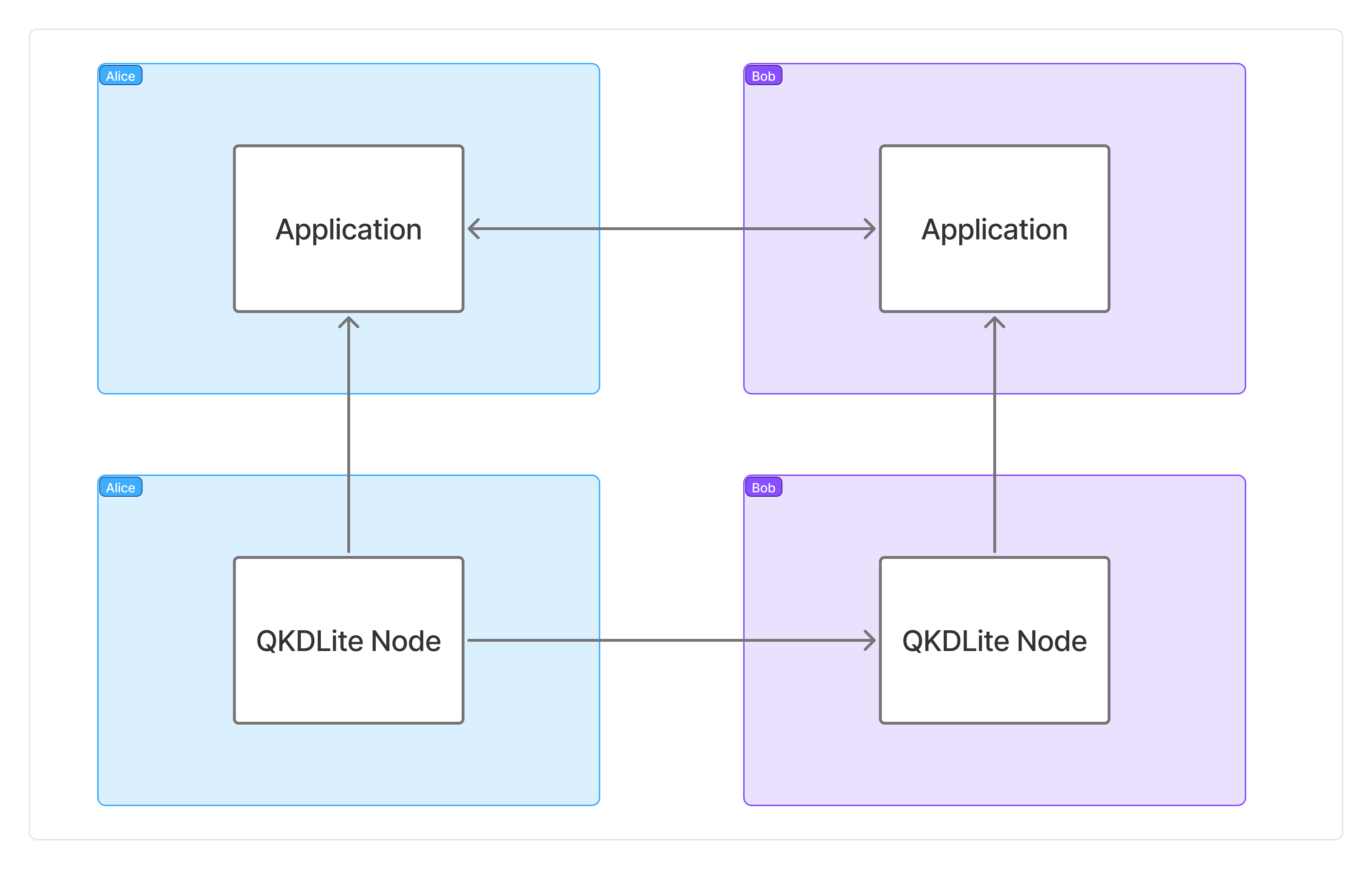
In this configuration, QKDLite is deployed on a single node per site, with no redundancy. A node failure takes the site’s QKDLite instance down until the node recovers.
7.2.2. 99.9%
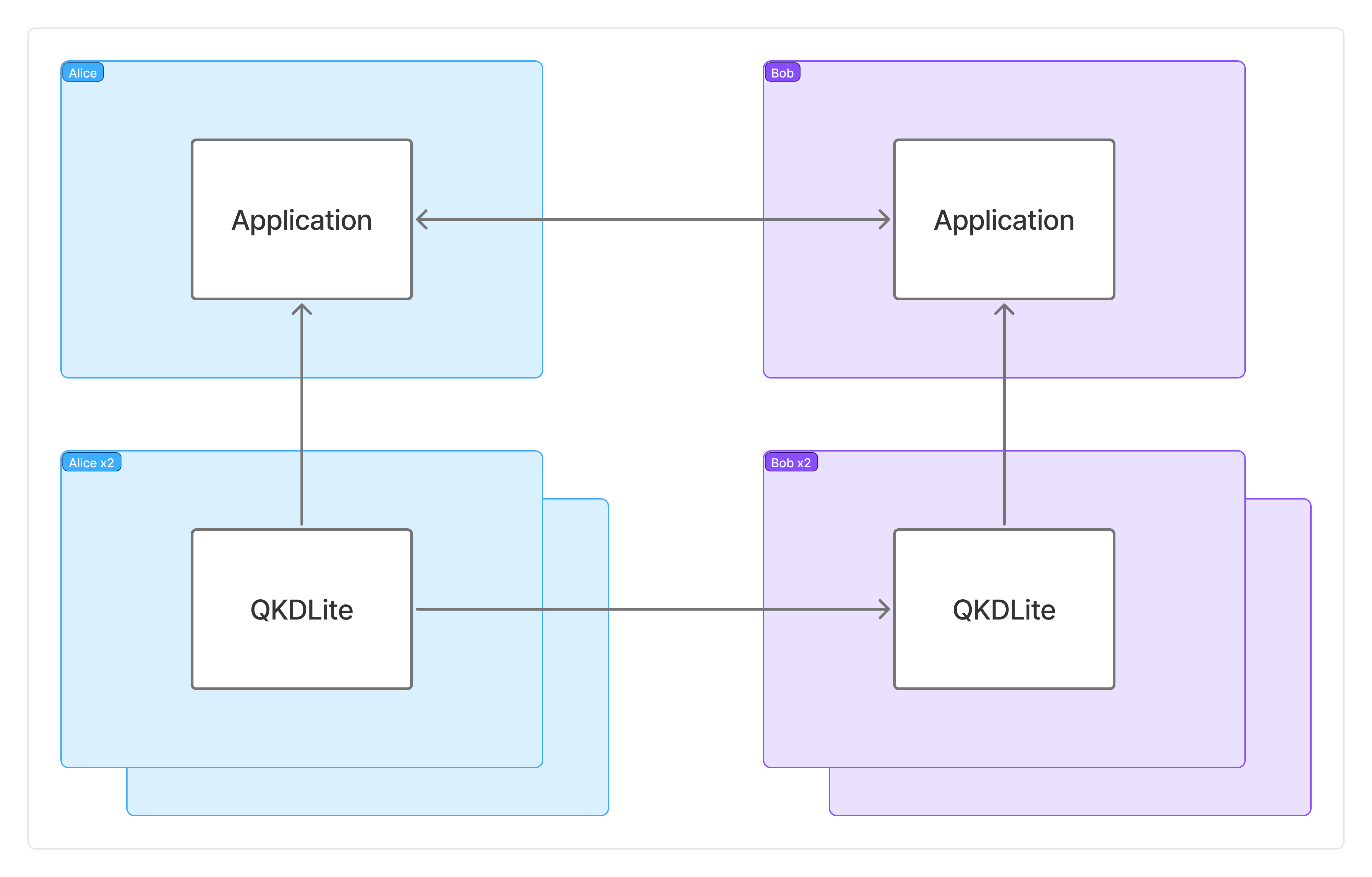
In this configuration, QKDLite is deployed across two nodes per site, with a Kubernetes cluster at each site managing the deployment and uptime of QKDLite and its nodes. Each cluster is responsible for scheduling the QKDLite workloads onto its nodes, restarting failed containers, and rescheduling workloads onto the surviving node if a node becomes unavailable.
7.2.3. 99.95%
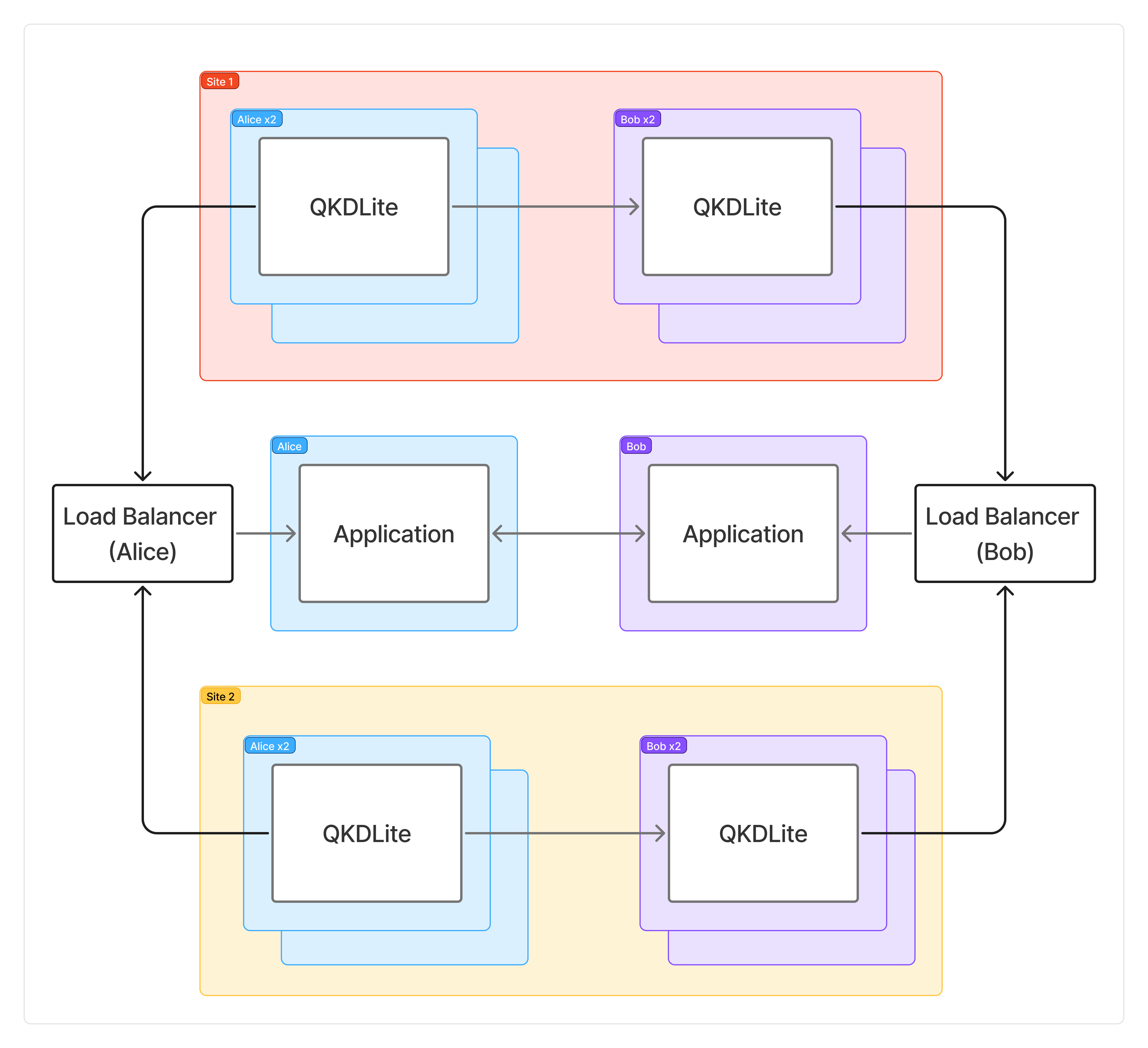
In this configuration, QKDLite is deployed in a hot-warm setup. Both the hot and warm setups deploy QKDLite identically to the 99.95% configuration, so each setup retains the node-level redundancy and Kubernetes-managed failover described there.
The two setups are then layered behind load balancers, which provides seamless failover to the warm setup when the hot setup goes down, with minimal downtime, adding site-level redundancy on top of the node-level redundancy already present in each setup.
Warning
To support automatic failover for load balancing, volumes should be replicated across sites out-of-band for both Alice and Bob, so that key delivery continues uninterrupted when failover occurs.
Where volume replication is not possible, routing at the load balancers must be synchronised from the hot to the warm site. This coordination prevents mismatched endpoints (e.g. a Warm Alice paired with a Hot Bob).